
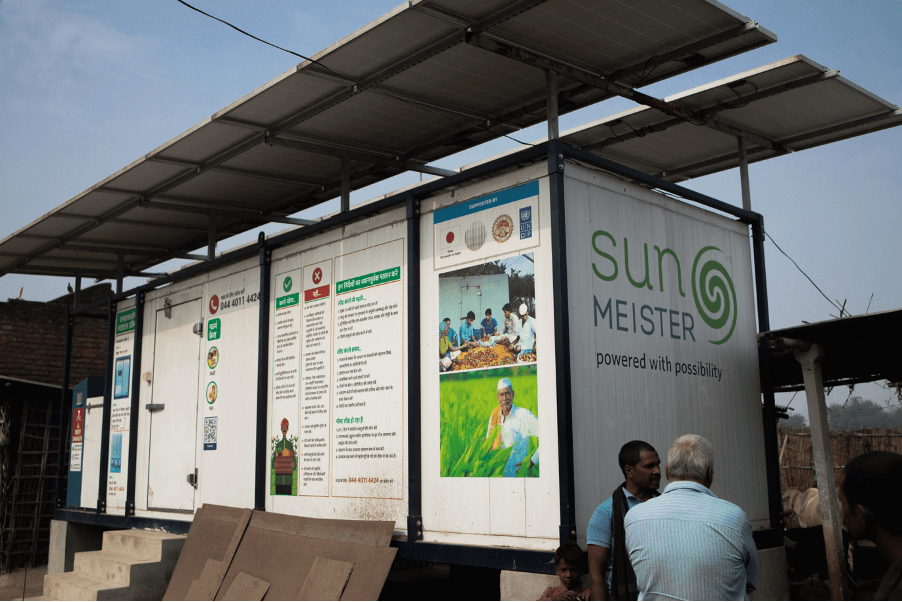
Agriculture is one of India’s most important economic sectors, supporting millions of farmers, businesses and rural communities. However, producing quality crops is only one part of the agricultural value chain. Preserving that produce after harvesting is equally important.
Fruits, vegetables, flowers, dairy products, fish and other perishable goods require appropriate storage conditions to maintain their freshness and quality. Without adequate cooling, these products can deteriorate quickly, resulting in post-harvest losses, reduced market value and lower farmer incomes.
Traditional cold storage facilities often depend heavily on grid electricity or diesel generators. In rural and remote agricultural locations, unreliable electricity, high operating costs and limited infrastructure can make continuous refrigeration difficult.
Solar-powered cold storage offers a practical alternative. By combining solar energy, efficient refrigeration, thermal management and suitable energy storage, these systems can help preserve agricultural produce while reducing dependence on conventional electricity sources.
Sunmeister Energy provides fully electric solar-powered cold storage solutions designed for agricultural and commercial applications, helping businesses and farmers build more reliable and sustainable cold-chain infrastructure.
What Is Solar-Powered Cold Storage?
Solar-powered cold storage is a refrigeration facility that uses solar photovoltaic (PV) panels as its primary energy source to operate cooling equipment and preserve perishable products.
The system converts sunlight into electricity, which powers refrigeration equipment and other electrical components. Depending on the design, batteries, thermal energy storage or a hybrid power source can provide additional operating flexibility when solar generation is insufficient.
A typical solar-powered cold storage system includes:
- Solar photovoltaic panels
- Solar charge controllers or solar inverter equipment
- Refrigeration compressors and cooling equipment
- Insulated cold room panels and doors
- Battery storage, where required
- Thermal energy storage, where appropriate
- Inverters and power management equipment
- Temperature and humidity monitoring
- Electrical protection and control systems
The system is designed around the type of produce being stored, required storage temperature, daily product intake, cooling load and operating conditions.
Unlike conventional cold storage facilities that depend entirely on grid electricity, solar-powered systems can generate a significant part or, in suitably designed applications, all of their operating electricity from renewable energy.
Why Is Cold Storage Important for Indian Agriculture?
India produces large quantities of fruits, vegetables, dairy products, fish and other perishable commodities. However, agricultural produce is vulnerable to deterioration during harvesting, handling, transportation and storage.
Several factors contribute to post-harvest losses:
- High temperatures after harvesting
- Delays in transportation
- Inadequate pre-cooling facilities
- Insufficient cold storage infrastructure
- Unreliable electricity supply
- Poor handling and packaging practices
- Breaks in the cold chain
- Limited access to nearby markets
Temperature management is especially important for products such as tomatoes, mangoes, grapes, bananas, leafy vegetables, flowers, milk and seafood.
A well-designed cold storage facility helps slow down the deterioration process by maintaining appropriate environmental conditions.
The Government of India’s Ministry of Food Processing Industries operates the Integrated Cold Chain and Value Addition Infrastructure scheme to support infrastructure across the supply chain, from farm gate to consumer. Its project components include pre-cooling, sorting, grading, multi-product cold storage, processing facilities and refrigerated transportation.
This reflects the importance of developing integrated cold-chain infrastructure rather than treating storage as an isolated facility.
How Solar-Powered Cold Storage Works
A solar-powered cold room combines renewable electricity generation with refrigeration and temperature management.
The main stages of operation are:
1. Solar Panels Generate Electricity
Solar panels installed on the roof or a nearby ground-mounted structure generate DC electricity from sunlight.
The amount of electricity generated depends on:
- Installed solar capacity
- Solar radiation at the location
- Panel orientation and tilt
- Shading and temperature
- Seasonal weather conditions
- System efficiency
The solar array should be sized according to the refrigeration load, operating schedule and other electrical requirements.
2. Power Electronics Manage Solar Energy
Solar charge controllers, inverters and power management equipment regulate the flow of electricity between the solar array, batteries and refrigeration equipment.
The power system must be designed to handle the refrigeration compressor’s starting and running requirements, along with fans, pumps, controls and other connected loads.
3. Refrigeration Maintains the Required Temperature
The refrigeration system removes heat from the insulated storage chamber and maintains the required temperature.
The refrigeration design depends on:
- Type of produce
- Required storage temperature
- Product quantity
- Initial product temperature
- Daily loading and unloading
- Insulation quality
- Door opening frequency
- Ambient temperature
Pre-cooling may also be required when produce enters the cold room at a temperature significantly higher than the desired storage temperature.
4. Energy Storage Supports Continued Cooling
Solar generation varies throughout the day. Refrigeration, however, may need to operate beyond daylight hours.
There are two important ways to manage this energy requirement.
Battery energy storage: Batteries store electrical energy generated during the day and supply electricity to refrigeration equipment when solar generation is insufficient.
Thermal energy storage: Thermal storage systems store cooling energy, often using materials such as phase-change materials or chilled water, depending on the design. This stored cooling can help maintain the required temperature when solar generation is low.
Some systems combine both approaches, while others use one or more alternative backup sources.
The appropriate configuration depends on the cold room’s temperature requirements, operating schedule and site conditions.
5. Monitoring Maintains Storage Conditions
Temperature monitoring is essential for protecting stored produce.
A suitable monitoring system can help operators track:
- Internal cold room temperature
- Temperature variations
- Refrigeration system operation
- Power consumption
- Solar energy generation
- Battery status, where installed
- System alarms and faults
Monitoring helps identify operational problems early and supports better management of the cold storage facility.
Key Benefits of Solar-Powered Cold Storage
Solar-powered cold storage offers benefits beyond renewable energy generation. It can improve the reliability and economics of agricultural storage when the system is properly designed and operated.
1. Reduces Post-Harvest Spoilage
Fresh agricultural produce begins to deteriorate after harvesting. High temperatures can accelerate moisture loss, ripening and microbial activity.
Appropriate cooling helps slow these processes and preserve product quality.
Solar-powered cold storage makes refrigeration possible in agricultural locations where access to reliable electricity may be limited.
2. Reduces Dependence on Grid Electricity
Many agricultural locations experience inconsistent electricity supply.
A solar-powered cold storage system can reduce dependence on grid electricity by generating power locally.
With suitable battery storage, thermal storage or backup integration, the facility can be designed to maintain cooling during periods of low solar generation.
3. Helps Farmers Improve Selling Flexibility
Farmers often need to sell perishable produce quickly because they lack access to suitable storage.
Cold storage can provide additional time to organise transportation, identify buyers and choose suitable selling opportunities.
Instead of immediately selling produce during periods of market oversupply, farmers may be able to store it under appropriate conditions and plan its sale more effectively.
However, storage does not guarantee higher prices. The economic benefit depends on market demand, storage costs, produce quality and the time required to sell.
4. Supports Rural and Remote Agricultural Locations
Solar-powered cold rooms can be deployed in areas where extending grid infrastructure may be difficult or expensive.
Potential applications include:
- Remote farms
- Farmer Producer Organisations (FPOs)
- Agricultural cooperatives
- Rural collection centres
- Horticultural production clusters
- Fisheries and dairy facilities
Decentralised cold storage can bring preservation facilities closer to where agricultural products are harvested.
5. Can Reduce Diesel Generator Dependence
Cold storage facilities in locations with unreliable grid electricity may use diesel generators as backup.
A properly designed solar-powered system can reduce generator operating hours and fuel consumption by supplying a larger share of the energy requirement through solar generation.
The actual reduction depends on the solar capacity, storage configuration, refrigeration load and operating conditions.
6. Supports More Sustainable Agricultural Logistics
Using solar electricity for refrigeration can reduce dependence on fossil-fuel-based electricity and diesel generation.
This can help lower operational emissions, particularly when the system replaces significant amounts of diesel-generated electricity.
Energy-efficient refrigeration, good insulation and appropriate operating practices further improve the environmental performance of cold storage facilities.
Agricultural Products That Can Benefit from Solar Cold Storage
Different agricultural products have different temperature, humidity and ventilation requirements. A cold storage facility should be designed according to the specific commodities it will handle.
Fruits
Fruits such as mangoes, grapes, apples, oranges, bananas and papayas require suitable temperature and humidity management.
Proper storage can help slow ripening, reduce deterioration and maintain market quality.
Vegetables
Tomatoes, leafy vegetables, carrots, capsicum, beans, cucumbers and other vegetables can benefit from appropriate cooling.
However, different vegetables have different storage requirements. Some products are sensitive to chilling injury and should not be stored at excessively low temperatures.
Flowers
Flowers are highly perishable and can lose freshness quickly after harvesting.
Cold storage helps maintain flower quality before transportation and distribution.
Applications include:
- Roses
- Jasmine
- Marigold
- Orchids
- Carnations
- Other commercial flowers
Dairy Products
Milk and dairy products require controlled temperature conditions to maintain quality and safety.
Solar-powered refrigeration can support milk collection centres, dairy facilities and rural chilling infrastructure when designed to meet the relevant food safety requirements.
Fish and Seafood
Fish and seafood require prompt and appropriate temperature management after harvesting.
Solar-powered cold storage and refrigeration can support fishing communities, seafood processing facilities and distribution operations.
The required temperature depends on the product, whether it is chilled or frozen, and the applicable food safety standards.
Solar Cold Storage for Different Agricultural Applications
1. Farmer Producer Organisations and Cooperatives
FPOs and agricultural cooperatives can use shared cold storage facilities to support multiple farmers.
A centralised or decentralised cold room can help aggregate produce, reduce handling delays and improve access to organised buyers.
Shared ownership and pay-per-use models may also help distribute infrastructure costs among participating farmers.
2. Rural Collection Centres
Collection centres located near farms can use solar-powered cold storage to preserve produce before transportation to wholesale markets, processing units or distribution hubs.
This can be especially useful for horticultural products that deteriorate quickly after harvesting.
3. Agricultural Processing Facilities
Food processing businesses require appropriate storage before raw materials enter production.
Solar-powered cold rooms can support the storage of fruits, vegetables and other temperature-sensitive ingredients.
4. Fisheries and Seafood Businesses
Fishing communities and seafood businesses require dependable refrigeration to maintain product quality.
Solar-powered refrigeration can be considered for landing centres, collection facilities, processing locations and remote coastal operations.
5. Dairy Collection and Chilling Centres
Milk collection facilities require reliable refrigeration to maintain product quality before transportation.
Solar energy and suitable storage systems can help support rural dairy infrastructure where grid reliability is a concern.
6. Hotels, Resorts and Food Distribution Businesses
Hospitality businesses, restaurants and food distributors also require reliable refrigeration.
Solar-powered cold rooms can help reduce grid dependence while supporting storage requirements for fresh produce, dairy and other food products.
How to Design an Efficient Solar-Powered Cold Storage System
A successful cold storage project begins with an assessment of the products, refrigeration requirements and site conditions.
Installing solar panels and refrigeration equipment without proper engineering can lead to insufficient cooling, high electricity consumption or unreliable operation.
The following factors should be considered.
1. Identify the Type of Produce
Different commodities require different storage conditions.
Before designing the facility, identify:
- Products to be stored
- Required temperature range
- Humidity requirements
- Ventilation requirements
- Storage duration
- Product sensitivity to chilling
- Whether different products will share the same chamber
Multi-product cold rooms require particular attention because commodities may have incompatible temperature, humidity or ethylene requirements.
2. Determine Storage Capacity
The storage capacity should match the quantity of produce expected to enter the facility.
Consider:
- Daily produce intake
- Peak seasonal production
- Storage duration
- Loading and unloading schedules
- Packaging and stacking arrangements
- Future expansion requirements
The cold room should provide sufficient space for air circulation around stored products.
3. Calculate the Refrigeration Load
The refrigeration system must remove heat entering the cold room and heat introduced by products, equipment and daily operations.
Important factors include:
- Heat transfer through insulated walls, roof and floor
- Heat from incoming produce
- Door openings and air infiltration
- Internal lighting and equipment
- Fans and motors
- Ambient temperature
- Required pull-down time
The refrigeration load calculation should be completed by an experienced refrigeration designer.
4. Select Appropriate Insulation
Insulation plays a major role in cold room efficiency.
Poor insulation allows heat to enter the storage chamber, increasing compressor operating time and energy consumption.
Important considerations include:
- Insulated panel thickness
- Insulation material
- Floor insulation
- Door sealing
- Thermal bridges
- Vapour barriers
- Installation quality
A well-insulated cold room reduces the amount of energy required to maintain the desired temperature.
5. Size the Solar Power System
The solar array should be sized based on the refrigeration system’s energy consumption and the location’s solar resource.
The design should account for:
- Daily refrigeration energy demand
- Solar irradiation
- Seasonal variations
- Solar panel losses
- Inverter efficiency
- Battery charging requirements
- Auxiliary loads
- Backup requirements
A system designed only around average sunshine may not provide sufficient reliability during cloudy periods or seasonal changes.
6. Select the Right Battery or Thermal Storage Configuration
Energy storage is important when refrigeration must continue during the night or periods of low solar generation.
Battery storage provides electrical energy, while thermal storage provides stored cooling.
The choice depends on the system design, required temperature stability, available space, operating schedule and cost.
Thermal storage may reduce the amount of electrical energy storage required in certain applications, but it must be designed to maintain the required product temperature safely.
7. Integrate Monitoring and Controls
A modern cold storage facility should include appropriate temperature sensors, refrigeration controls and alarms.
Remote monitoring can provide useful information about:
- Temperature history
- Cooling performance
- Solar power generation
- Battery status
- Energy consumption
- Equipment faults
For remote agricultural locations, remote monitoring can reduce the need for frequent physical inspection and help operators respond to problems more quickly.
Why Victron Energy Technology Is Important in Solar Cold Storage
Solar-powered cold storage requires more than solar panels and refrigeration equipment. A reliable electrical system is essential for managing solar generation, battery storage, grid supply and backup power.
Victron Energy offers power electronics and energy management products that can be integrated into suitable solar cold storage systems.
Important product categories include:
Victron MultiPlus and MultiPlus-II: Inverter/chargers that combine DC-to-AC conversion and battery charging functions. They can support suitable refrigeration loads when correctly sized.
Victron Quattro: Inverter/chargers designed for applications requiring multiple AC inputs, such as grid and generator integration.
Victron SmartSolar MPPT: Solar charge controllers that manage solar energy and optimise battery charging in systems using separate MPPT controllers.
Victron Lithium Batteries: Battery options for suitable energy storage configurations.
Victron Cerbo GX: A communication and monitoring device for supported energy systems.
Victron Remote Management (VRM): A remote monitoring platform that allows users to monitor compatible installations and review system performance.
For cold storage applications, inverter selection must account for compressor starting requirements, continuous refrigeration loads and auxiliary equipment. Battery selection must also consider the required operating duration and discharge capability.
Victron equipment is part of the power management system. The refrigeration plant, cold room insulation, cooling controls and commodity-specific storage conditions must be engineered separately as part of the complete project.
Sunmeister Energy – Solar-Powered Cold Storage Solutions in India
Sunmeister Energy provides complete solar and hybrid energy solutions for agricultural, commercial and industrial applications.
One of its specialised offerings is fully electric solar-powered cold storage, designed to support agricultural produce preservation while reducing dependence on conventional electricity sources and diesel generators.
Sunmeister approaches cold storage as an integrated engineering project rather than simply installing refrigeration equipment and solar panels.
Its solutions consider the complete system, including:
- Cold room design and insulation
- Refrigeration and cooling equipment
- Solar power generation
- Battery and energy storage integration
- Thermal energy storage where appropriate
- Victron inverter/chargers and MPPT systems
- Electrical protection and power management
- Temperature monitoring and system controls
- Installation and commissioning
- Remote monitoring and technical support
Sunmeister is India’s authorised Victron Energy distributor, installer and repair centre. Its expertise in hybrid and off-grid power systems supports the integration of renewable energy and reliable electrical infrastructure for cold storage applications.
With more than 12 years of experience and over 500 installations, Sunmeister works across homes, farms, businesses, institutions and industrial applications.
Whether you are planning a cold room for a farm, a decentralised agricultural collection centre, a commercial food storage facility or a larger cold-chain project, Sunmeister can help evaluate the site requirements and develop a suitable solution.
Government Support for Cold Storage Infrastructure in India
The Indian government has several programmes supporting agricultural infrastructure, food preservation and cold-chain development.
One important initiative is the Ministry of Food Processing Industries’ Integrated Cold Chain and Value Addition Infrastructure scheme, implemented under the Pradhan Mantri Kisan Sampada Yojana.
The scheme supports eligible projects involving infrastructure such as:
- Farm-level pre-cooling facilities
- Pack houses
- Multi-product and multi-temperature cold storage
- Refrigerated transport
- Distribution hubs
- Processing and preservation infrastructure
The scheme provides financial assistance subject to eligibility, project components and applicable guidelines. The assistance structure and conditions should be checked against the latest official guidelines before planning a project.
The Ministry of New and Renewable Energy has also published design specifications, performance guidelines and testing procedures for solar cold storage systems with thermal energy storage backup.
These developments highlight the growing importance of integrating renewable energy with agricultural preservation infrastructure.
Entrepreneurs, FPOs, cooperatives and businesses considering a cold storage project should evaluate the relevant central and state-level schemes, eligibility requirements and financing options before proceeding.
The Business Opportunity in Solar-Powered Cold Storage
Solar cold storage can create opportunities for farmers, agricultural entrepreneurs, FPOs, food processors and rural infrastructure developers.
Some potential business models include:
Pay-per-use cold storage: Farmers pay for the quantity of produce stored and the duration of storage.
FPO-owned facilities: Farmer Producer Organisations operate shared cold storage facilities for their members.
Collection and distribution centres: Cold storage is integrated with produce aggregation, sorting, grading and transportation.
Commercial cold-chain operations: Entrepreneurs provide storage services to wholesalers, retailers, processors and distributors.
Integrated farm infrastructure: Cold storage is combined with solar irrigation, processing, packaging and other agricultural facilities.
The commercial viability of each model depends on local crop production, seasonal demand, utilisation rates, transportation costs, electricity savings and access to buyers.
A feasibility study should be completed before investing in a cold storage facility.
Frequently Asked Questions About Solar-Powered Cold Storage
1. What is solar-powered cold storage?
Solar-powered cold storage is a refrigeration facility that uses solar photovoltaic energy to operate cooling equipment and preserve perishable products. Depending on the design, batteries, thermal energy storage or backup power sources can support operation when sunlight is unavailable.
2. Can solar energy operate a cold storage facility throughout the day and night?
Yes. A properly designed system can operate continuously using a combination of solar generation, electrical batteries, thermal energy storage and suitable backup sources. The configuration depends on the refrigeration load and required temperature stability.
3. Which agricultural products can be stored in solar cold storage?
Fruits, vegetables, flowers, dairy products, fish and other temperature-sensitive commodities can be stored in appropriately designed cold rooms. Each product requires suitable temperature, humidity and ventilation conditions.
4. Does solar cold storage require batteries?
Not necessarily. Some systems use thermal energy storage to maintain cooling when solar generation is unavailable. Other systems use batteries to supply electricity to refrigeration equipment. The appropriate solution depends on the application and reliability requirements.
5. What is the difference between battery storage and thermal energy storage?
Battery storage stores electrical energy for later use. Thermal energy storage stores cooling energy, which can help maintain low temperatures when refrigeration equipment is not operating or solar generation is insufficient.
6. Is solar-powered cold storage suitable for small farmers?
Yes. Smaller decentralised systems can be designed for individual farms, cooperatives, FPOs and rural collection centres. Shared-use business models can also make cold storage more accessible to farmers.
7. Can solar cold storage reduce diesel generator consumption?
Yes. A suitably designed solar system can supply a significant portion of the refrigeration energy requirement, reducing the need to operate diesel generators. Actual fuel savings depend on the solar capacity, refrigeration load and operating conditions.
8. Can Victron Energy products be used in solar cold storage?
Yes. Suitable Victron inverter/chargers, solar charge controllers, batteries and monitoring equipment can be integrated into the electrical power system of a solar cold storage facility. The refrigeration equipment and complete power system must be correctly engineered for the required load.
9. Does Sunmeister provide solar-powered cold storage solutions in India?
Yes. Sunmeister provides fully electric solar-powered cold storage solutions along with hybrid and off-grid power systems. Its services include system design, solar integration, power management, installation, monitoring and technical support.
Conclusion
Solar-powered cold storage has the potential to transform agricultural logistics by bringing reliable refrigeration closer to farms, collection centres and rural markets.
By combining solar electricity, efficient refrigeration, insulation, battery storage or thermal energy storage and intelligent monitoring, these systems can help reduce spoilage, improve product quality and support more resilient agricultural supply chains.
For farmers and businesses, the value of cold storage goes beyond preserving produce. It can create greater flexibility in marketing, improve access to buyers and support the development of rural agricultural infrastructure.
Sunmeister Energy combines solar engineering, cold storage expertise and Victron Energy power management technology to develop complete energy solutions for agricultural and commercial applications.
Planning a solar-powered cold storage facility for your farm, FPO, food processing business or agricultural enterprise? Contact Sunmeister Energy to discuss your project requirements and explore a suitable solar-powered cold storage solution.